Tax Planning Sugar LandWhat April still remembers
April files the year. It does not invent the year.
Read October first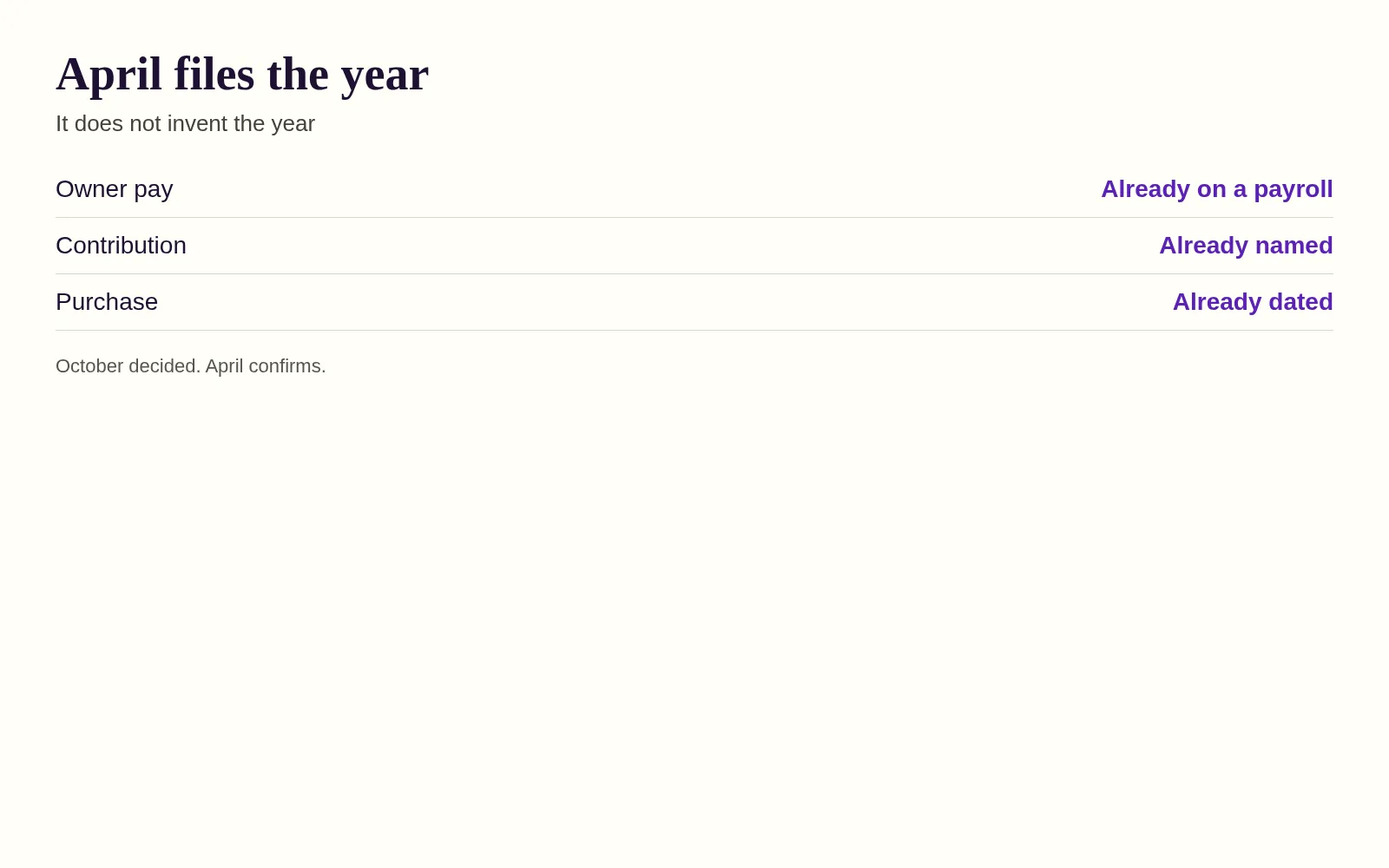
April files the year. It does not invent the year.
Read October firstApril is the month people remember, because the return has a due date and the balance, if there is one, finally has a name. The year itself was built earlier. A wage that was never set cannot be invented in the last week of March without the payroll to match it. A contribution that was never funded cannot be wished onto the return. April confirms. It does not rewind the payroll calendar.
That is why this page sits beside the October stack instead of replacing it. If you are reading in April, we still start from the closed months. The closed months tell us the ceiling, and we name that ceiling out loud. We will not dress a reconstruction up as a choice you made in the fall.
A long season does not add days to a tax year. The filing month can feel busy, and the year still ends where the books already closed. April can name what happened. It cannot stretch the year so a wage that was never paid shows up as if it had been.
Fort Bend wants the business property list by April 15 in an ordinary year. A written request filed by that day buys 30 more days. Moving it again, out to May 15, takes a stated reason. Miss the list, or skip it, and the penalty can be 10 percent of the tax on that property. You do not choose the protest day. The appraisal notice already printed it.
The franchise report is the 15th of May, not the 15th of April. People fold them together because both numbers are 15. They are different reports, to different agencies, from different lines of the books. A sales return, meanwhile, still comes due on the 20th of its own month. Three dates. Three envelopes.
A Sugar Land owner who folds those three dates into one Friday is the person this page is for. The property list can move when you ask in writing. The franchise report cannot borrow that extra month. The sales return keeps the 20th no matter which of the other two is on your mind.
Estimates belong to the year as it happened, not to the panic of the filing month. If too little was paid in, April is when you meet the difference. The useful question in October was whether the payments matched the closed months. The useful question in April is whether the return matches those same months. We do not open a new plan in the week the return is due and pretend it was always the plan.
The company return and your own return both wait on the same close. A month the bank has not agreed to is not a source. We would rather file from ten clean months and a named gap than from twelve months that were smoothed in a weekend. You hear about the gap before the return goes.
Payroll setup, if it never happened, is still setup. We can place a provider under your name for the year ahead. We cannot honestly rebuild a year of payday that a provider never ran. April is a hard month to learn that. October is the kinder one. If you are already in April, we say which of those two sentences is yours.
Do not read a number on this page as your balance. Your balance comes later, from the return, once the shut months and the payments are in it. We prepare that return. A headline here will not guess the figure.
Say how far the books got, and what you hoped October would have decided.

You will be talking to the Steven Palmieri practice.